

Lab Testing in Charleston, SC
At REVVWELL, our team provides lab testing in Charleston, SC, to help individuals gain clearer insight into overall health, nutritional status, hormone balance, metabolic function, and other areas of concern. We offer access to standard and advanced laboratory evaluations using blood, saliva, urine, stool, and bodily fluid or tissue samples when appropriate. Our team reviews results alongside symptoms, health history, and personal wellness goals to support a more complete understanding of each individual’s health. Ongoing testing and objective measurement may also help track changes over time and guide personalized recommendations. For more information, contact us or schedule an appointment online. We are conveniently located at 1755 Sam Rittenberg Blvd, Charleston, SC 29407.
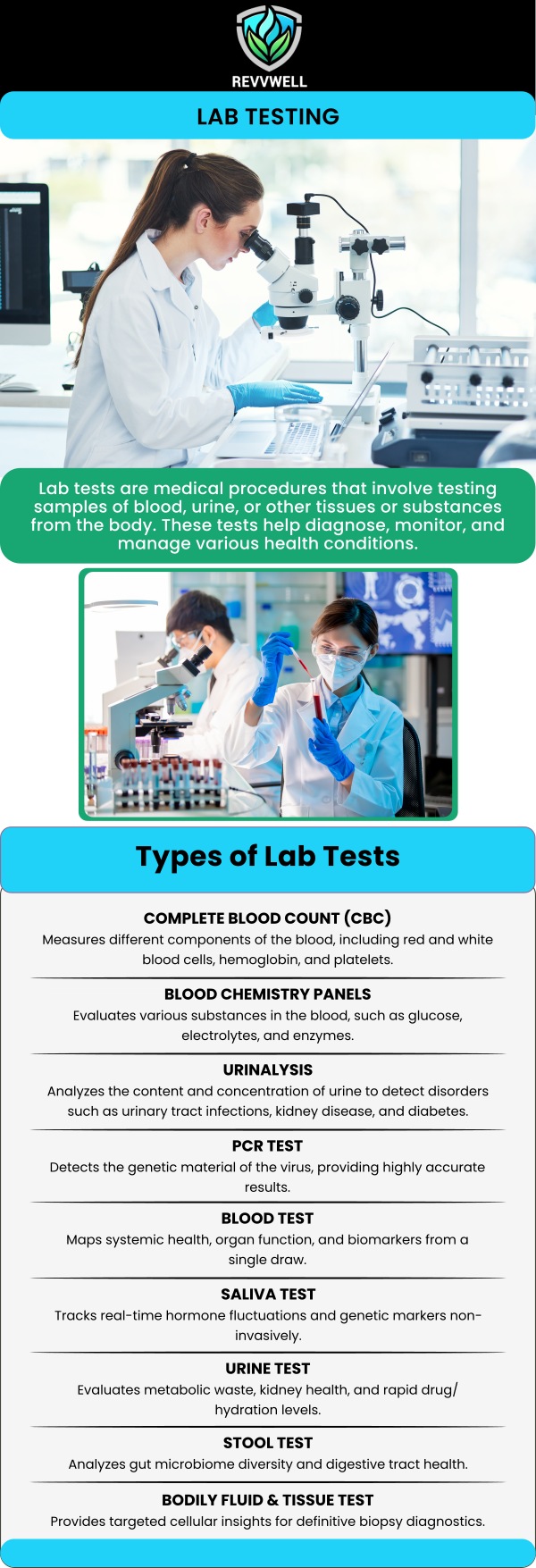
Table of Contents:
What health conditions can lab testing help identify?
Who may benefit from routine lab testing?
What do abnormal lab testing results mean?
When should you schedule follow-up lab testing?
Personalized Lab Testing for Better Health in Charleston, SC at REVVWELL
Lab testing can help identify signs associated with many health concerns, including blood sugar changes, cholesterol concerns, anemia, nutritional deficiencies, thyroid irregularities, and changes in liver or kidney function. Depending on the symptoms and health history being evaluated, testing may also provide information about inflammation, immune function, hormone balance, metabolic health, or digestive concerns. Lab results support clinical decision-making but are generally interpreted alongside symptoms, medical history, physical findings, and other diagnostic information.
Functional Medicine may use both routine and advanced laboratory testing to investigate concerns that are not always included in a standard health panel. Nutrient testing may assess levels or related markers for iron, vitamin B12, folate, vitamin D, magnesium, and other nutrients when a deficiency or imbalance is suspected. This can help determine whether symptoms may be connected to inadequate intake, absorption concerns, medication use, or other factors affecting nutritional status.
Testing may also be considered for selected environmental exposures, including heavy metals such as lead, mercury, arsenic, or cadmium and certain environmental chemicals or their metabolites. These evaluations may use blood, urine, or other appropriate specimens and should be selected according to a person’s symptoms and known occupational, residential, dietary, or environmental exposure history. Detecting a substance in the body does not automatically mean it has caused illness, so results require careful clinical interpretation.
When mold exposure is a concern, evaluation may include symptoms, exposure history, environmental information, and carefully selected laboratory testing. Results should not be viewed as definitive proof of mold-related illness on their own. At REVVWELL, testing is considered within the broader context of the individual’s health rather than relying on one isolated result.
Standard and advanced laboratory evaluations may involve blood, saliva, urine, stool, or other bodily fluid and tissue samples. The appropriate specimen and test are selected according to the health concern being investigated. At REVVWELL, lab testing is used to develop a more complete view of health, identify patterns that may require attention, and support personalized recommendations focused on prevention, improved well-being, and long-term follow-up.
Routine lab testing may benefit adults who want to monitor their general health, establish baseline measurements, or identify changes that may not yet be causing noticeable symptoms. It may also be helpful for individuals with a family history of certain conditions, ongoing fatigue, unexplained weight changes, digestive concerns, changes in energy, or other persistent symptoms. People managing an existing condition may undergo testing to track their health over time and determine whether their current care plan remains appropriate.
Individuals taking certain prescribed medications may also benefit from laboratory monitoring. Some medications require therapeutic drug monitoring, which measures the amount of medication in the blood to confirm that levels remain high enough to be effective without becoming high enough to increase the risk of toxicity. Testing may also monitor liver function, kidney function, electrolytes, blood counts, or other markers that could be affected by treatment.
Advanced testing may be appropriate for people with persistent symptoms, suspected nutrient deficiencies, possible environmental or occupational exposures, complex medication regimens, digestive concerns, hormone-related symptoms, or a family history that increases the risk of certain diseases. The goal is not to order every available test, but to select testing that addresses a specific clinical question and may meaningfully influence the individual’s care plan.
Disease prevention may also include screening based on age, sex, family history, lifestyle, and individual risk factors. Certain tests may help identify cancer, precancerous changes, or other diseases before symptoms develop. Newer blood-based and genetic screening options are becoming available, but they vary in accuracy, supporting evidence, and appropriate use. Emerging tests should be considered alongside established screening recommendations rather than used as automatic replacements.
The type and frequency of testing should be based on factors such as age, medical history, symptoms, lifestyle, previous results, and individual risk factors. Testing may include blood, saliva, urine, stool, or other bodily fluid and tissue samples when clinically appropriate. REVVWELL uses standard and advanced testing as part of an ongoing physician relationship, allowing health information to be reviewed over time rather than relying on a single appointment or isolated result.
An abnormal lab result means that a measured value falls outside the laboratory’s established reference range or that a substance was detected when it was not expected. However, an abnormal result does not automatically confirm that a person has a medical condition. Results may be influenced by age, hydration, food intake, physical activity, medications, supplements, collection methods, and other individual factors.
A physician interprets abnormal findings by considering the degree of change, related test values, symptoms, medical history, and previous results. Some findings may require repeat testing, additional laboratory evaluation, monitoring, or another type of assessment. At REVVWELL, results are reviewed within the broader context of the individual’s health so that one isolated number is not treated as the entire picture. This approach supports informed next steps and objective measurement over time.
Follow-up lab testing may be scheduled after an abnormal or unclear result, when symptoms continue, or when a physician needs additional information to understand a health concern. It may also be recommended to monitor an existing condition, compare current findings with earlier measurements, or evaluate how the body is responding to lifestyle changes or a personalized care plan. The appropriate timing varies because some values can change quickly, while others are better reviewed over a longer interval.
Follow-up testing may be especially important after starting, stopping, or adjusting a prescribed medication. For medications that require blood-level monitoring, the timing of the sample may need to be coordinated with the most recent dose so the result can be interpreted accurately. Additional testing may also be needed to confirm that the liver, kidneys, blood cells, electrolytes, or other body systems are tolerating treatment safely.
Nutrient testing may be repeated after dietary changes or supplementation to determine whether a deficiency is improving and to help prevent unnecessary or excessive supplementation. Exposure-related testing may be repeated when clinically appropriate to evaluate whether levels are changing after an identified exposure has been reduced or removed. Follow-up after an abnormal screening test should occur according to the physician’s recommendations because screening alone does not establish a diagnosis.
A physician determines the follow-up schedule based on the specific test, the significance of the findings, current symptoms, health history, and the reason testing was ordered. Repeat testing should not be delayed when symptoms worsen or new concerns develop. REVVWELL emphasizes objective measurement and long-term follow-up, using blood, saliva, urine, stool, and other bodily fluid or tissue testing when appropriate to track patterns and guide ongoing health decisions.
At REVVWELL, Dr. William J. Weirs, M.D., and our team provide personalized lab testing in Charleston, SC, to help individuals better understand their health. Standard and advanced laboratory evaluations may use blood, saliva, urine, stool, and other bodily fluid or tissue samples based on individual needs. Testing can provide meaningful information about nutritional status, metabolic health, hormone balance, inflammation, organ function, and other areas that may affect overall well-being.
Rather than viewing lab results as isolated numbers, Dr. William J. Weirs, M.D., and our team review findings alongside symptoms, medical history, lifestyle factors, and long-term health goals. This personalized approach allows REVVWELL to identify important patterns, monitor changes over time, and support informed recommendations focused on disease prevention, improved quality of life, and healthier aging. For more information, contact us or schedule an appointment online. We are conveniently located at 1755 Sam Rittenberg Blvd, Charleston, SC 29407. We serve patients from Downtown Charleston SC, West Ashley SC, James Island SC, Mt. Pleasant SC, Daniel Island SC, Johns Island SC, Kiawah Island SC, Seabrook Island SC, North Charleston SC, Hanahan SC, Folly Beach SC, and surrounding areas.

Check Out Our 5 Star Reviews


Additional Services You May Need
▸Functional Medicine
▸Advanced Lab Testing
▸Peptide Therapy
▸IV Therapy
▸Genomics
▸Functional Health Coaching
▸Optimal Fitness

Additional Services You May Need
▸Functional Medicine
▸Advanced Lab Testing
▸Peptide Therapy
▸IV Therapy
▸Genomics
▸Functional Health Coaching
▸Optimal Fitness




 Send Text
 How May I Help You?