

How Peptide Therapy Supports Your Health
Peptide therapy in Charleston may support personalized health goals by influencing specific biological pathways involved in metabolism, hormone activity, appetite, and cellular signaling. At REVVWELL, Dr. William J. Weirs, a certified Peptide Practitioner, and our team evaluate each individual’s symptoms, medical history, laboratory findings, and wellness priorities before determining whether peptide therapy may be appropriate. Ongoing medical supervision helps monitor progress, address potential side effects, and keep treatment aligned with long-term health needs. For more information, contact us or schedule an appointment online. We are conveniently located at 1755 Sam Rittenberg Blvd, Charleston, SC 29407.
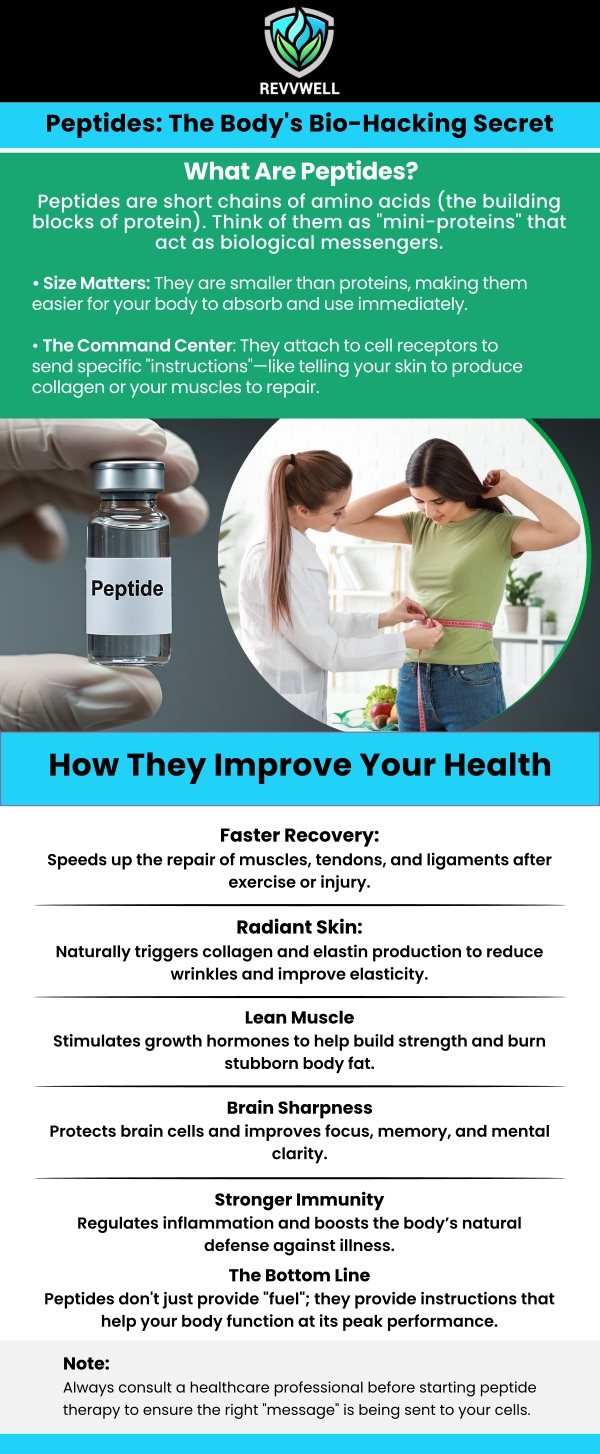
Table of Contents:
What is peptide therapy and how may it support your health?
How does peptide therapy work within the body?
How is peptide therapy personalized for individual needs?
Why is medical supervision important during peptide therapy?
How Certified Peptide Practitioner Dr. William J. Weirs Personalizes Peptide Therapy at REVVWELL
Disclaimer: Peptide therapy results vary and are not guaranteed. Treatment may not be suitable for everyone. Patients should discuss risks, side effects, and contraindications with a healthcare professional and complete informed consent before treatment.
Peptide therapy is a broad term for treatments that use specific chains of amino acids designed to influence particular biological pathways. Peptides naturally function as signaling molecules in the body, helping regulate processes such as hormone activity, metabolism, appetite, and other cellular functions. The purpose and potential benefit of therapy depend on the specific peptide being used and the medical reason it is recommended.
Certain peptide-based treatments are used for defined health conditions and have established clinical applications. Other peptides promoted for general wellness, recovery, body composition, or healthy aging may have limited supporting evidence. A medical evaluation is necessary to determine whether a particular treatment is appropriate, relevant to the individual’s needs, and supported by reliable clinical information.
Peptides can act like messengers by attaching to specific receptors on cells and triggering a biological response. Depending on the peptide, this response may affect hormone release, blood sugar regulation, appetite, tissue signaling, or another targeted process. Because each peptide interacts with different pathways, peptide therapies do not all work in the same way or produce the same effects.
The body may break down some peptides quickly, which can influence how a treatment is formulated, administered, and scheduled. Absorption, metabolism, health conditions, and interactions with other treatments may also affect the response. Understanding the exact peptide, its intended purpose, and its expected action is important before treatment begins.
Personalization begins with reviewing the individual’s symptoms, medical history, current health conditions, medications, laboratory findings, and treatment goals. A physician may also consider age, allergies, previous treatment responses, kidney or liver function, and other factors that could affect safety. This information helps determine whether peptide therapy may be considered and which option may be appropriate.
When treatment is recommended, the plan may include a specific formulation, method of administration, schedule, monitoring process, and follow-up timeline. Peptide therapy should not be selected simply because it is popular or associated with broad wellness claims. A personalized plan should be based on a clear clinical purpose, product quality, available evidence, and an individualized review of potential benefits and risks.
Medical supervision helps confirm that the treatment is appropriate, the product comes from a reliable source, and possible risks have been considered. Peptide-based products can vary in quality, purity, dosing, approval status, and supporting evidence. Professional oversight helps reduce the risk of inappropriate use and ensures that treatment decisions are based on the individual’s health history and needs.
Ongoing supervision also allows the physician to monitor progress, identify side effects, review laboratory findings, and adjust or discontinue treatment when necessary. Individuals should report new symptoms and disclose all medications and supplements they use. Medical guidance is especially important because peptide treatments may involve treatment-specific risks, interactions, or monitoring requirements.
At REVVWELL, Dr. William J. Weirs personalizes peptide therapy by reviewing each individual’s symptoms, medical history, laboratory findings, current treatments, and long-term wellness goals. Because peptides interact with different biological pathways, recommendations are based on each person’s specific needs rather than a one-size-fits-all plan. Treatment may include individualized peptide selection, scheduling, progress monitoring, and ongoing medical follow-up.
Dr. William J. Weirs is SEEDS-certified through the SSRP Institute’s Peptide Therapy Certification program, bringing advanced education and expertise to peptide therapy at REVVWELL. His certification strengthens his ability to evaluate available options, consider potential benefits and risks, and provide informed medical supervision. This advanced training supports a thoughtful approach centered on safety, personalization, and meaningful health goals.
For more information, contact us or schedule an appointment online. We are conveniently located at 1755 Sam Rittenberg Blvd, Charleston, SC 29407. We serve patients from Downtown Charleston SC, West Ashley SC, James Island SC, Mt. Pleasant SC, Daniel Island SC, Johns Island SC, Kiawah Island SC, Seabrook Island SC, North Charleston SC, Hanahan SC, Folly Beach SC, and surrounding areas.

Check Out Our 5 Star Reviews


Additional Services You May Need
▸Functional Medicine
▸Advanced Lab Testing
▸Peptide Therapy
▸IV Therapy
▸Genomics
▸Functional Health Coaching
▸Optimal Fitness

Additional Services You May Need
▸Functional Medicine
▸Advanced Lab Testing
▸Peptide Therapy
▸IV Therapy
▸Genomics
▸Functional Health Coaching
▸Optimal Fitness




 Send Text
 How May I Help You?